 · EST. 1998
Private Label in Turkey: MOQs, Lead Times & Process
"Can you make it with my label?" has three completely different answers, with MOQs ranging from a handful of pieces to several hundred. Here is which level you need, what it costs and how long it takes.
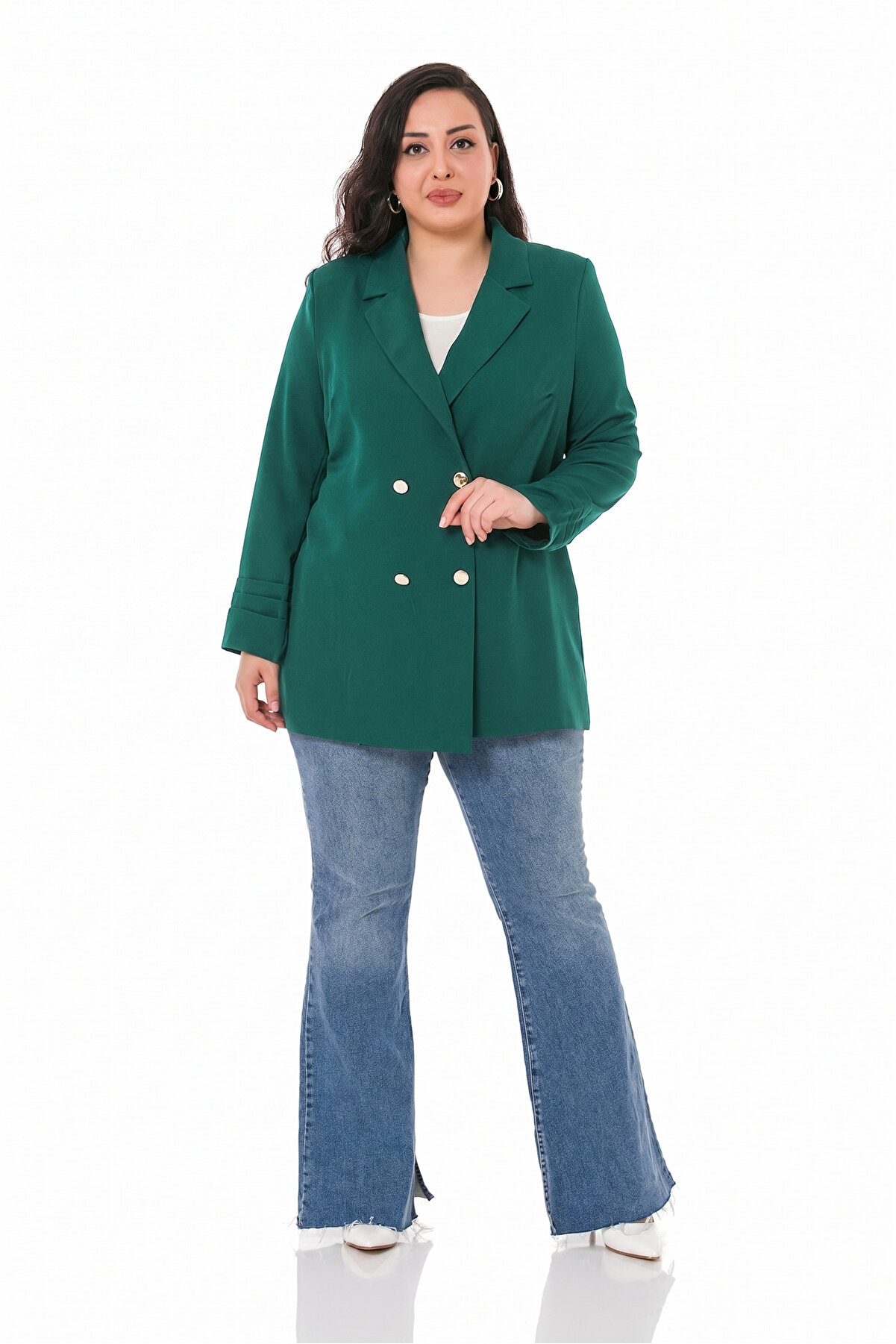
The phrase "private label" hides three very different jobs, and most buyers ask for the expensive one when they only need the cheap one. Sewing your label into an existing garment, running an existing pattern in your own fabric, and manufacturing from your own tech pack are separate processes with separate minimums, separate timelines and separate risks. This guide separates them clearly so you can ask for the right thing. Disentis Modest has produced in our own Istanbul workshop since 1998 across 600+ models in sizes 34–60, so the process below is the one we walk buyers through.
Three Levels of "Private Label" — Pick the Right One
Before discussing quantities, decide which of these you actually need. Getting this wrong is what turns a two-week job into a two-month one.
- Level 1 — Label only. An existing model, produced as normal, with your woven label and hangtag instead of a neutral one. Nothing about the garment changes. Fastest and cheapest by a wide margin.
- Level 2 — Variation on an existing block. An existing pattern produced in a different fabric, colour, sleeve length or hem length. The pattern already exists and is already graded 34–60, so the development risk is small.
- Level 3 — Full custom. Your own design, your own tech pack, a new pattern drafted and graded from scratch. Highest minimums, longest timeline, and the only route that gives you something no one else can buy.
- Which one you need: if your goal is that the label inside says your brand, Level 1 is enough. If your goal is a colour your competitor cannot get, Level 2 is enough. Level 3 is for a silhouette that does not exist yet.
Practical tip: 80% of buyers who ask for custom production want Level 1 or 2. Before you commission a pattern, walk the collection and ask whether an existing model in a different fabric would achieve the same commercial result at a tenth of the cost and a third of the wait.
Realistic Minimums at Each Level
These are market-typical figures for the Istanbul plus-size sector. Every producer sets its own, so treat them as a planning frame and confirm your specific case before budgeting.
Level 1 — label only
- Garment quantity: effectively your normal order size, since nothing in production changes. Our own $400 minimum order applies as usual.
- The real minimum is the label, not the garment. Woven-label makers typically require 500–1,000 pieces per label design; printed care labels run similar. Order the labels once, use them across many orders.
- Cost: roughly $0.10–0.40 per woven label and $0.15–0.50 per hangtag with string, depending on size, colours and finish.
- Added time: 7–12 days to produce labels the first time, then near-zero on subsequent orders because you hold stock of them.
Level 2 — fabric or colour variation
- Per style, per colour: commonly 50–150 pieces. The driver is the fabric roll, not the sewing.
- Why the roll decides: a roll of woven or jersey typically runs 40–70 kg, roughly 150–250 metres. At 1.8–2.4 m per plus-size dress, one roll is around 80–140 garments — which is why quantities cluster there.
- Custom dye lot: if you want a colour that is not already in the mill's stock range, dyeing minimums commonly start at 300–500 metres, plus a lab dip round for colour approval.
- Stock-colour shortcut: choosing from fabrics the mill already holds removes the dye minimum entirely and can cut two to three weeks from the timeline.
Level 3 — full custom from a tech pack
- Per style: commonly 200–500 pieces, spread across your size curve within 34–60.
- Why so much higher: pattern drafting, grading across a wide plus range, sampling rounds and a dedicated cutting lay are fixed costs. Below roughly 200 pieces they dominate the unit price and the piece stops being competitive.
- Sampling: budget $40–150 per style for the first sample, often credited against the bulk order if you proceed.
- Expect 2–3 sample rounds. One is optimistic, four means the tech pack was unclear.
Lead Times, Week by Week
Time is where custom production surprises people, not price. Here is what each level realistically takes from confirmed order to goods packed and ready to ship.
- Level 1 — label only: 2–3 weeks total. Labels 7–12 days (first time only), picking and production as normal, then 2–5 days for packing and QC.
- Level 2 — variation, stock fabric: 3–5 weeks. Fabric release 3–7 days, cutting and sewing 10–20 days, finishing and QC 3–5 days.
- Level 2 — variation, custom dye: add 2–3 weeks for lab dips and the dye lot itself.
- Level 3 — full custom: 6–10 weeks. Pattern and first sample 7–15 days, your review and revisions 5–10 days, second sample 5–10 days, fabric 7–15 days, bulk production 15–25 days, finishing and QC 3–5 days.
- Then add shipping. Air express is 3–6 working days plus clearance; sea adds 4–6 weeks. Custom production plus sea freight is a three-to-four-month commitment — plan it as such.
Practical tip: the single biggest cause of delay is not the factory — it is the approval loop. Every day you take to review a sample is a day added to the timeline. Block time in your calendar for sample review before you place the order, not after it arrives.
What Your Tech Pack Must Contain
For Level 3, the quality of your tech pack determines the number of sample rounds, which determines your timeline and your cost. A vague brief is not cheaper — it is slower and more expensive.
- Flat sketch, front and back. A photo of a similar garment plus clear notes on what differs is acceptable and often clearer than a bad drawing.
- A measurement table for one base size, with your intended grading steps. Specify the base you want graded from — most plus work is drafted on a middle size such as 50 or 52 rather than the smallest.
- Fabric specification: composition, weight in grams per square metre, and a physical reference swatch if you have one. "Viscose" alone is not a specification.
- Trims: zip type and length, button size, elastic width, lining or none, thread colour.
- Label and packing instructions: label placement, hangtag position, folding method, polybag or hanger.
- Tolerances and quality points: which measurements are critical and which are flexible. Naming three critical points prevents most fit disputes.
The Costs That Sit Outside the Unit Price
Your quoted price per piece is not the whole cost of a custom programme. These items are normal, not hidden — but they belong in the budget from day one.
- Sampling: $40–150 per style, per round, commonly credited against bulk.
- Label and hangtag production: a one-off setup that pays back across every future order.
- Custom dye lot: priced by metre with a minimum, plus lab dips.
- Fabric residue: if your quantity does not consume a full roll, you may be charged for the balance or asked to raise the quantity to use it.
- Compliance labelling: fibre composition and care labelling requirements differ by destination market. Confirm what your country needs before the labels are woven — reworking labels after production is far more expensive than getting the text right first.
- Payment structure: as with our stock orders, custom work runs on a proforma invoice paid by bank transfer, commonly 70% deposit and 30% before shipping.
How to Phase a First Custom Programme Without Betting the Business
The most expensive custom order is the one placed before you know the style sells. Sequence it so each step is paid for by the one before.
- Step 1 — validate with stock. Buy the closest existing model from the collection in a small quantity and see whether your customers respond to that silhouette at all. This costs weeks, not months.
- Step 2 — add your label. Once a model proves itself, move it to Level 1 so your brand is on the piece that already sells.
- Step 3 — differentiate the fabric. Move the proven model to Level 2 in a colour or quality no one else in your market carries.
- Step 4 — commission custom. Only now, with real sell-through data behind the silhouette, commit to Level 3 quantities.
- Throughout: send your list or your brief on WhatsApp to +90 555 336 47 86; you get availability or feasibility confirmed and a proforma invoice back, and we ship worldwide.
Everything is cut and sewn in our own Istanbul workshop, which matters more for custom work than for stock: when the pattern room, the cutting table and the sewing line are in the same building, a fit correction is a conversation rather than a chain of emails between three subcontractors. That is the practical reason a well-specified variation can move from approval to packed cartons in under a month — and the reason a vague brief still cannot.
Frequently asked questions
What is the minimum order for private label clothing in Turkey?
It depends entirely on the level of customisation. Label-only work needs no extra garment minimum beyond the normal order — our $400 minimum applies — though woven-label makers typically require 500–1,000 labels. Fabric or colour variations commonly need 50–150 pieces per style per colour, and full custom production from a tech pack usually starts at 200–500 pieces per style.
How long does private label production take?
Label-only orders take about 2–3 weeks, with labels themselves needing 7–12 days the first time. A variation in stock fabric runs 3–5 weeks, and adding a custom dye lot pushes that to 5–8 weeks. Full custom production from a tech pack typically takes 6–10 weeks before shipping.
What does a tech pack need to include?
A flat sketch front and back, a measurement table for one base size with grading steps, fabric composition and weight, trim specifications, label and packing instructions, and a note on which measurements are critical. A reference garment plus clear notes on what differs is often more useful than a drawing. Vague briefs cost extra sample rounds, not less money.
Can I just put my own label on existing wholesale models?
Yes — that is Level 1 private label and it is the fastest, cheapest route. The garment and production are unchanged; only the woven label and hangtag differ. Order labels once in a batch of 500–1,000 and use them across many future orders. Message us on WhatsApp at +90 555 336 47 86 to discuss label options.
Why is the MOQ per colour rather than per style?
Because fabric drives the minimum, not sewing. A roll of woven or jersey typically runs 150–250 metres, and a plus-size dress consumes 1.8–2.4 metres, so one roll yields roughly 80–140 garments in that colour. A second colour means a second roll, and a colour that is not in stock also triggers a dye-lot minimum of 300–500 metres.
How much does sampling cost?
Expect $40–150 per style per sample round, commonly credited against the bulk order if you proceed. Plan for two to three rounds — one is optimistic and four usually means the tech pack was unclear. Your own review speed is often the biggest variable in how long sampling takes.
Is custom production cheaper than buying stock?
Rarely at small volumes. Pattern drafting, grading across 34–60, sampling and a dedicated cutting lay are fixed costs that dominate the unit price below roughly 200 pieces. Custom pays off when volume is high enough to spread those costs, or when the differentiation itself supports a higher retail price.
How should a small brand start with custom production?
Validate first, customise later. Buy the closest existing model from the collection in a small quantity to test whether the silhouette sells, then add your label, then change the fabric, and only commit to full custom once you have real sell-through data. Each step should be funded by the one before it.