 · EST. 1998
How to Buy Plus-Size Coats Wholesale: Fit, Fabrics and Size Curves
A coat ties up more money per piece than anything else on your rail, and a fit problem above size 46 turns it into a markdown. This guide covers what to check before you buy: fit points, fabrics, lengths, colours and how deep to go on sizes.
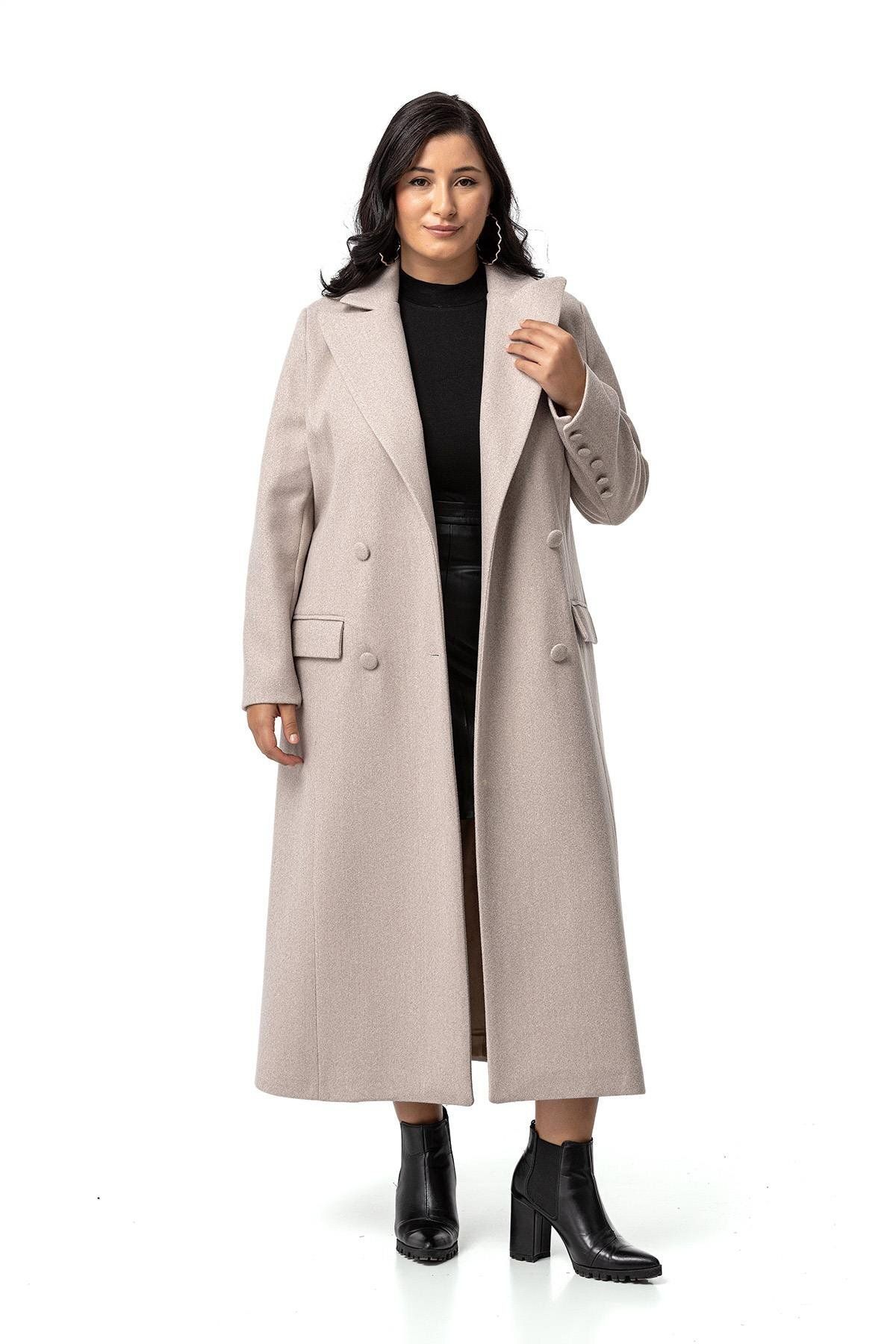
Buying coats is different from buying blouses or dresses. The unit value is higher, the selling window is shorter and plus-size customers are less forgiving of a coat that pulls across the back or cannot close over a jumper. The good news is that most coat mistakes are predictable — and avoidable with a few questions before you confirm the order.
Which fit points matter most in a plus-size coat?
A plus-size coat is not a straight-size coat scaled up. It is graded for a fuller bust, upper arm and hip, and those are exactly the places where a badly graded coat fails. Check these points before anything else:
- Shoulders. The shoulder seam should sit at the shoulder point. Drop-sleeve cuts, such as our drop-sleeve short coat (W-6640), are more forgiving across a range of body shapes.
- Bust and chest ease. A winter coat is worn over knitwear. It must close comfortably over a jumper, not just over a blouse.
- Armhole and upper arm. In our experience, this is where most coat fit complaints come from in large sizes: a tight armhole makes the whole coat feel small.
- Sleeve length. Longer arms need sleeves that still cover the wrist when the arm is raised.
- Hips and length. Straight and A-line cuts give room over the hips; a slit makes a long coat easier to walk in.
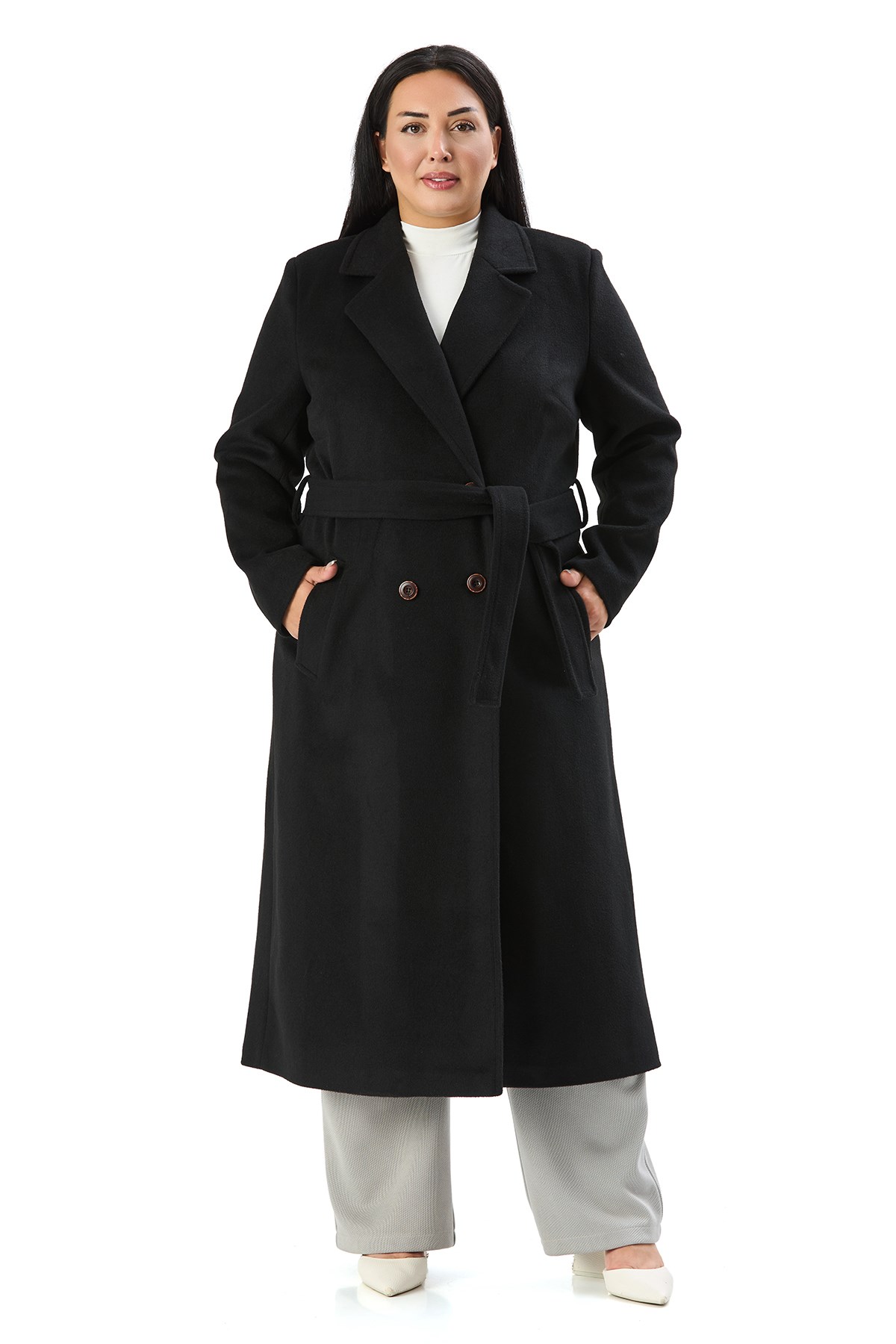
- Closure. Double-breasted fronts give extra overlap; belted styles let the customer adjust the waist herself.
Before a large coat order, ask your supplier for flat measurements of the largest size you will stock: chest, shoulder, sleeve, upper arm and length. It takes five minutes and prevents the most expensive returns in your season.
What should you know about coat fabrics?
Read the composition, not just the photo: the same look can come in very different fibres. The main coat fabrics in wholesale plus-size ranges:
- Wool-touch (kaşe). Kaşe is the Turkish trade name for a felted coat fabric with the look and hand of wool. It comes both in polyester — our new AW 2026/27 coats are polyester-based kaşe with no wool — and in wool blends. Wool-touch describes the handle, not the fibre, so check the composition on each style's page.
- Wool-blend. For customers who ask for wool. Always check the percentage: on our product pages it is stated, for example 27%, 30% or 50% wool.
- Trench fabrics. Usually polyester, sometimes water-repellent. Trench coats extend the season at both ends; for rainy climates, choose the water-repellent styles. See the trench coats collection.
- Faux leather. An urban look; with a faux-fur lining it becomes a real winter piece. See the leather-look coats.
- Textured fabrics. Bouclé, herringbone and velvet are statement pieces. Buy them in smaller depth, next to your core coats.
Lining matters as much as the outer fabric: a lined coat slides over knitwear and feels warmer, while an unlined coat is lighter for layering and for milder weeks.
Short, mid or long: which lengths sell?
In our experience, long coats carry most of the plus-size coat business: they cover the hips, they are easy to wear over any outfit and they photograph well on the rail. Short coats bring in customers who already own a long coat, and they sell well in cities and to younger customers. A practical starting point is two long styles and one short style, adjusted after the first season. In modest markets, longer lengths and fuller cuts are expected — our modest wholesale brief covers coverage, sleeves and length.
How deep should you go on sizes?
Depth beats breadth for coats even more than for other categories, because a customer who does not find her size in the coat she has chosen rarely waits for a reorder. Ordering in size sets (seri — one piece of each size in a colour) keeps the size curve balanced from the first delivery; our guide to how size sets work explains it. After the first delivery, weight your reorders towards the sizes that actually sold in your shop.
- Check the size range per style and colour. Most of our coats start at 44 and run to 54, 56 or 58; the four new AW 2026/27 coats run from 44 to 58 in every colour. Each colour card shows the current range of that colour.
- Compare sizes across systems. If your customers think in EU, UK or US sizes, use our measurements guide before you order.
How many colours should you buy?
For most boutiques, two or three colours per coat style is enough: one or two neutrals with real depth — in our experience, black and camel sell almost everywhere — and one season colour such as burgundy or navy. Each colour has its own card in our catalogue, so you can compare colours side by side, and colours can be mixed freely in the same order.
What should you check when the coats arrive?
- Measurements of one piece per size against the figures you were given.
- Lining seams, pocket bags and hem — the places that fail first in wear.
- Buttons, belt loops and zips — sewn on firmly and working smoothly.
- Pressing — coats travel folded, so plan a steam before they go on the rail.
- Faults or missing pieces — report them within 7 days of delivery, with photos, as our terms require.
For a general checklist that works across categories, see our quality checklist for plus-size garments.
How do you plan coat reorders?
Set a fixed review point every few weeks during the season: count what sold by style, colour and size, then reorder the proven styles while they are still in stock. In-stock availability is what makes a quick reorder possible, so ask which styles can be repeated before you place the first order. Sending the reorder as a WhatsApp list with style codes keeps it to minutes — see how to order wholesale on WhatsApp — and our buying calendar shows how to plan the year.
Ready to choose your coats? Browse the Autumn–Winter collection with a free membership to see wholesale prices and live stock, or read the FAQ for minimum order, payment and shipping.
Frequently asked questions
What size range should a plus-size boutique stock in coats?
Start from the range your customers actually buy, then order in size sets so every size is covered from the first delivery. Most of our coats start at size 44 and run to 54, 56 or 58, depending on the style; the four new AW 2026/27 coats run from 44 to 58.
What is the difference between wool-touch and wool-blend coats?
Wool-touch (kaşe) is a felted coat fabric with the look and hand of wool; the name describes the handle, not the fibre, and it can be 100% polyester. Wool-blend coats contain real wool — the percentage is stated on the product page, for example 27%, 30% or 50%.
Are trench coats worth stocking for autumn and winter?
Yes, as a transitional piece. Trench coats extend the season at both ends and add a lighter option next to your winter coats; for rainy climates, choose water-repellent styles.
How many colours per coat style should a boutique order?
In our experience, two or three colours per style is enough for most boutiques: one or two neutrals with depth, such as black and camel, and one season colour such as burgundy or navy.
How can I check the fit of a coat before ordering wholesale?
Ask for the flat measurements of the largest size you will stock — chest, shoulder, sleeve, upper arm and length — and compare them with a coat that already sells well in your shop.
When should I reorder coats during the season?
At a fixed review point every few weeks, while the proven styles are still in stock. Reorder the styles that sold, with the size curve corrected towards the sizes that sold.